
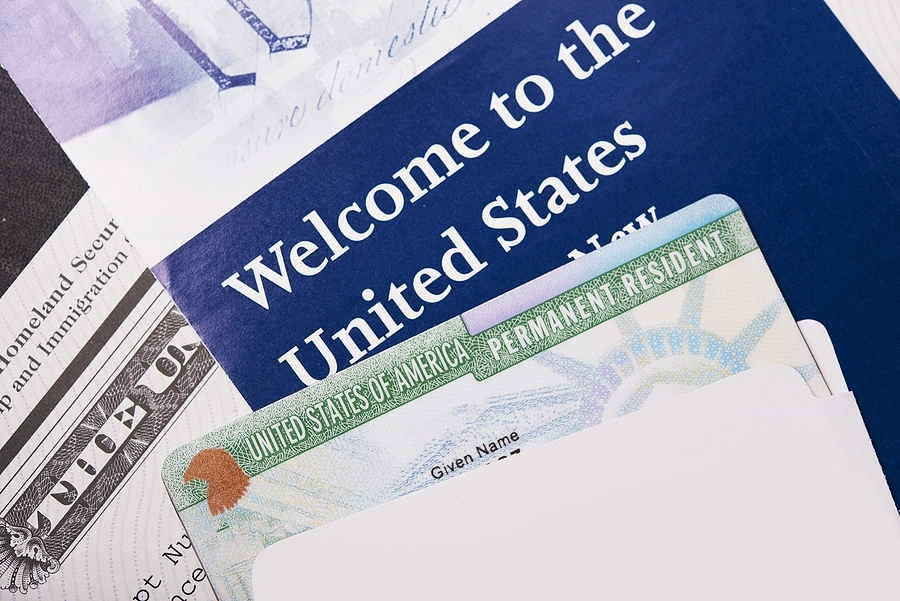
Special Immigrant Juvenile Status (SIJS) is a valuable path to permanent residency for certain children present in the United States — regardless of their immigration status — who have experienced abuse, neglect, or abandonment by one or both parents. SIJS is available to children whether they entered with a visa, are in removal proceedings, or have no prior immigration history at all.
Understanding what comes next after SIJS approval is essential for a successful transition. This includes knowing when to file, what forms to prepare, and what challenges may arise.
The Goal of SIJS and What It Grants
Once SIJS is granted, it gives a child the opportunity to apply for a green card through adjustment of status. However, SIJS itself does not automatically lead to permanent residency. It is a classification that makes a person eligible to apply for it.
The benefit of SIJS is that it allows applicants to bypass some of the typical barriers that would otherwise prevent someone from adjusting their status. For instance, many inadmissibility grounds can be waived in the SIJS process, such as unlawful entry. Additionally, SIJS recipients are placed in a special category that is not subject to the usual family-based or employment-based immigration limits.
Checking Visa Availability
Before filing the green card application, you must confirm that a visa number is available in the correct category. SIJS-based green card applicants fall under the EB-4 (fourth preference) special immigrant category — specifically the Special Immigrant Juvenile subcategory. The EB-4 category includes several subcategories, and visa availability is tracked separately for each.
Chargeability for SIJS purposes is based on the applicant’s country of birth, not country of citizenship or last residence. This matters significantly for children born in high-demand countries. For applicants born in Mexico, El Salvador, Guatemala, and Honduras, there are often substantial backlogs — meaning that even after SIJS is approved, there may be a waiting period of months or years before the I-485 can be filed.
To determine whether a visa number is currently available, check the U.S. Department of State Visa Bulletin at travel.state.gov, which is updated monthly. When reading the Visa Bulletin, pay attention to two separate columns:
Final Action Dates: The date by which your priority date must be current before USCIS will approve your green card
Dates for Filing: An earlier date that USCIS sometimes allows applicants to use to file the I-485 even before the Final Action Date is reached — check uscis.gov each month to confirm whether USCIS is accepting filings under the Date for Filing column
Your priority date is generally the date USCIS received your Form I-360. Tracking this date against the monthly Visa Bulletin is essential to knowing when you can move forward.
Filing Form I-485 to Adjust Status
Once a visa number is current, the next step is to file Form I-485, Application to Register Permanent Residence or Adjust Status. This form is the official request to become a lawful permanent resident.
Along with Form I-485, several supporting documents must be submitted:
- Proof of SIJS approval (Form I-360 approval notice)
- Birth certificate with certified English translation
- Court orders that led to SIJS eligibility
- Medical examination (Form I-693)
- Documentation confirming the juvenile court order remains valid and in effect. At the I-485 stage, USCIS will review whether the underlying basis for your SIJS classification still exists. The juvenile court order that supported your I-360 approval must not have been modified, terminated, or otherwise invalidated. If your living situation has changed significantly since the court order was issued — particularly if there has been any reunification with the parent who was found to have abused, neglected, or abandoned you — this can raise questions about your continued eligibility. If any changes have occurred since your I-360 was approved, discuss them with your attorney before filing the I-485.
Each case is unique, so the evidence may vary. It’s crucial that applicants ensure all documents are accurate, complete, and properly translated.
Biometrics and Interview
After USCIS receives the I-485 application, they will schedule a biometrics appointment to collect fingerprints, photographs, and a signature. This is standard for all green card applicants and is used for background checks.
Depending on the case, USCIS may also schedule an interview. During the interview, an officer may ask questions about the applicant’s history, family situation, and documents submitted. The interview is also a chance for the officer to confirm that the child still meets all the requirements for permanent residency under SIJS.
In some cases, USCIS may waive the interview, especially if the evidence is strong and there are no concerns.
Work Authorization and Travel Permission
After submitting Form I-485, applicants can also file for a work permit (Form I-765) and travel document (Form I-131). These applications are optional but helpful.
A work permit allows the applicant to legally work in the U.S. while the green card application is pending. Travel permission, known as Advance Parole, allows for limited travel outside the United States while the I-485 is pending. However, travel during this period carries serious risks for SIJS recipients and should not be taken lightly:
If you depart the United States without first obtaining Advance Parole, your pending I-485 will be considered abandoned and cannot be reinstated. You would lose your place in the process entirely.
Even with Advance Parole, travel carries risks for individuals who entered without inspection, have prior orders of removal, or have other inadmissibility issues. Returning to a home country where the trafficking, abuse, or violence occurred may also create safety risks.
If you are in removal proceedings, travel outside the U.S. — even with Advance Parole — requires careful legal analysis before departing.
Before making any travel plans while your I-485 is pending, consult your immigration attorney. The consequences of traveling without proper authorization or without understanding your specific risks can be irreversible.
Things That Can Delay the Process
Some factors can slow down or complicate the green card process after SIJS:
- Aging out: SIJS applicants must apply before turning 21. However, as long as the Form I-360 was filed before their 21st birthday, they remain eligible for SIJS-based adjustment of status, even after turning 21.
- Removal proceedings and prior removal orders: An applicant’s immigration court history significantly affects how — and where — adjustment of status is pursued. There are several distinct situations to understand:
- Active/Open Removal Proceedings
If the applicant currently has open removal proceedings before an immigration judge, adjustment of status must generally be adjudicated before the immigration judge — not through USCIS directly. This means filing the I-485 with the immigration court and having the judge decide the case as part of the ongoing proceedings. This is a more complex process that requires careful coordination between your immigration attorney and the court. Do not file the I-485 with USCIS if you have open removal proceedings without first consulting an attorney — filing with the wrong body can create serious complications.
- Administratively Closed Removal Proceedings
If your removal proceedings were administratively closed — meaning the case was placed on hold without a final decision — your case may need to be recalendared (reopened on the court’s active docket) before adjustment can be pursued before the judge. Administrative closure does not end removal proceedings, and the path forward depends on the specific circumstances of your case and current court policies. An attorney can help determine whether to seek recalendaring or pursue another procedural approach.
- Prior Final Orders of Removal
If the applicant has a prior final order of removal, adjustment of status through either USCIS or the immigration court is generally not available without first addressing that order. In most cases, the applicant will need to file a Motion to Reopen proceedings with the immigration court or the Board of Immigration Appeals (BIA) to reopen the case and create a procedural vehicle through which the SIJS-based adjustment can be adjudicated. A Motion to Reopen in this context must typically show:
- The existence of new facts or evidence — in this case the SIJS approval and visa availability
- That the motion is timely filed, or that an exception to the filing deadline applies
- That the underlying relief — SIJS-based adjustment — is prima facie approvable
Motions to Reopen have strict procedural requirements and deadlines. If the order of removal is old or if there have been prior motions filed, additional complexity may arise. This is one of the most technically demanding situations in immigration practice and requires experienced legal representation.
Regardless of which situation applies, if you have any history with immigration court — open proceedings, administratively closed proceedings, or a prior removal order — contact an immigration attorney before taking any steps toward filing your I-485. The procedural pathway matters enormously and a misstep can have serious consequences for your case.
- Criminal issues: Certain arrests or convictions may affect eligibility, even for SIJS recipients.
- Changes in household: Since SIJS is based on a juvenile court’s determination, major changes in the child’s home life may raise questions. For example, reunification with the parent who was previously found to be abusive or neglectful may complicate the case.
Life After Getting a Green Card
Once the green card is approved, the individual becomes a lawful permanent resident. This status comes with many rights and responsibilities, including the right to work, study, and live permanently in the United States.
After five years (or three, in some special circumstances), a green card holder may be eligible to apply for U.S. citizenship, provided they meet residency and moral character requirements.
It’s important to note that SIJS-based green card recipients cannot petition for their parents. This is due to the nature of SIJS findings, which often involve parental abuse, neglect, or abandonment. The law prevents green card holders who gained status through SIJS from sponsoring either parent for immigration benefits.
Working with an Attorney Matters
While SIJS is designed to protect vulnerable children, the path from approval to permanent residency is complex. It involves navigating immigration forms, understanding court findings, tracking visa bulletin dates, and avoiding missteps that could lead to delays or denials.
Immigration attorneys who understand both family court and immigration law are in the best position to guide applicants through this process. Filing for a green card after SIJS approval is not just about paperwork — it is about giving a young person who has already survived incredibly difficult circumstances the opportunity to build a stable, secure future. The legal process can feel overwhelming, especially for children and young adults who are still processing trauma while navigating complex immigration requirements.
At every stage of this process, it is important that applicants feel supported — not just legally, but personally. Many organizations offer counseling, case management, and advocacy services specifically for SIJS recipients. An immigration attorney who understands both the legal and human dimensions of these cases can help connect clients with those resources while ensuring the legal process moves forward as smoothly as possible.
You have already shown tremendous resilience. The path to a green card is the next step in a journey that began long before any form was filed — and you don’t have to walk it alone.
Saavedra & Perez Law Offers Guidance You Can Trust
At Saavedra & Perez Law in Fairfax, we understand how critical this process is for young people who have already faced difficult circumstances. From the moment SIJS is approved to the final green card approval, we are here to guide clients and their families with care and precision. If you or a loved one needs help with SIJS or any part of the green card process, our team is ready to provide trusted legal support to protect your future in the United States.
