
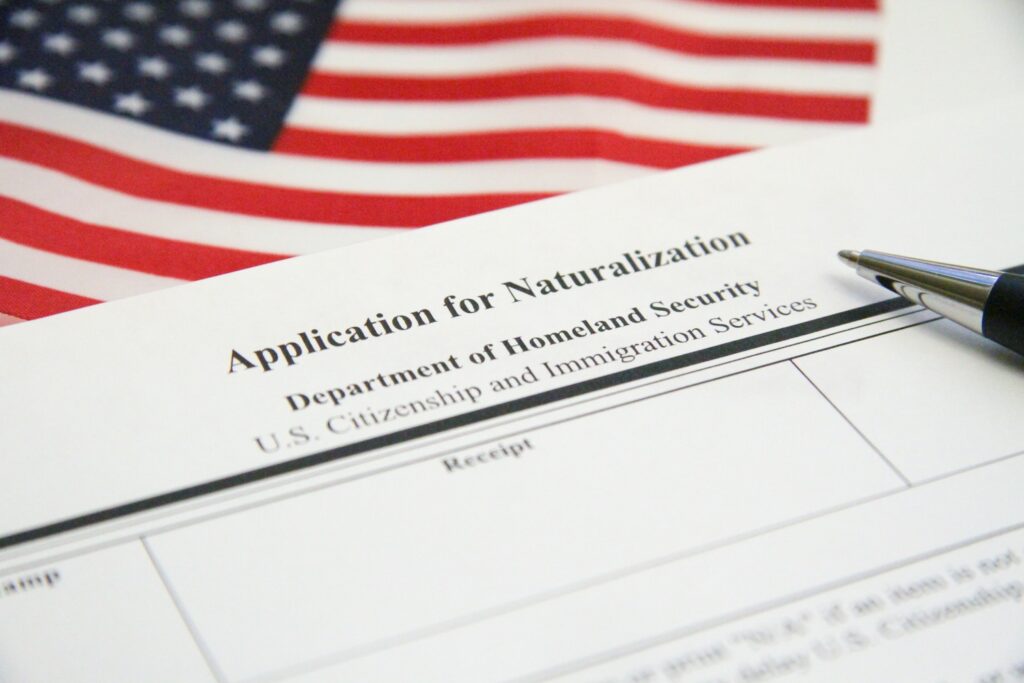
For many immigrants, citizenship represents the end of a long journey.
After years as a lawful permanent resident, the time comes to take the next step. It is a major achievement. A goal that may have taken years to reach.
So, when the citizenship interview finally comes, many people assume USCIS is simply there to confirm they meet the basic requirements for naturalization.
What many people do not realize is that when you apply for U.S. citizenship, USCIS is not only evaluating whether you qualify to become a U.S. citizen. The agency is also reviewing your immigration history, the information you have provided to the government over the years, and, in some cases, even the way you obtained your permanent resident status.
And it is during that review that some people discover issues they did not know existed—or situations they thought had been left in the past.
That is why it is important to understand what USCIS is really reviewing before submitting a citizenship application.
Citizenship Means a Full Review of Your Record.
When someone files Form N-400, USCIS does more than check a box on basic eligibility.
The reviewing officer has access to your full immigration record and may compare your current application against documents, forms, and statements you submitted years ago.
This may include:
- Previous immigration applications
- Entries into and departures from the United States
- Permanent residence history
- Criminal history
- Information provided in prior interviews or forms
In most cases, this process moves forward without issues. However, when inconsistencies appear—or when matters that were not carefully examined in the past come to light—additional questions may arise.
When the Past Comes Back Up
Many people assume that after years with a green card, anything from the past is just that — the past. That is not always true.
During a citizenship application, questions may arise about events that occurred many years ago, including:
- Incorrect information provided during a prior immigration process
- Issues related to entries into or time spent in the United States
- Arrests or criminal history
- Inconsistent statements across different applications
- Circumstances surrounding the way permanent residence was obtained
Sometimes these situations were honest mistakes. Other times, they involve issues that the person never realized could raise questions years later.
The important thing to understand is that the citizenship process often involves a much broader review than many people expect.
Can a Citizenship Denial Lead to Deportation Proceedings?
This is one of the most difficult questions—but also one of the most important.
In some circumstances, the answer is yes.
When USCIS identifies serious concerns about a person’s eligibility — or about how they obtained their immigration status — the consequences can extend beyond a simple denial.
Depending on the specific facts of the case, the government may take additional action, including the possibility of initiating removal proceedings.
That does not mean every person whose citizenship application is denied will end up in immigration court.
It also does not mean that every citizenship application is risky.
But it does mean that this is a process that deserves careful preparation and evaluation when there are questions about a person’s immigration history.
The Mistake Is Not Wanting to Become a Citizen
Becoming a U.S. citizen is a legitimate and valuable goal.
Applying for citizenship is not the problem.
The problem is assuming that years as a permanent resident automatically means there is nothing in your history worth reviewing before you apply.
Every case is different. What may be a straightforward process for one person may require a deeper legal analysis for another before taking the next step.
That is why it is important to review factors such as:
- Your complete immigration history
- Extended trips outside the United States
- Criminal history
- Previous immigration applications
- Any circumstances that occurred during the process of obtaining permanent residence
Questions Worth Asking Yourself Before Applying
Before filing a citizenship application, consider the following questions:
- Was there anything unusual about the way I obtained my green card?
- Have I ever been arrested, charged, or convicted of a crime?
- Have I spent long periods of time outside the United States?
- Has all the information I provided to the government been consistent over time?
- Have I reviewed my complete immigration history with an immigration attorney?
Answering these questions does not mean there is a problem.
It means you are making an informed decision.
An Important Step Deserves Preparation
Citizenship can open new opportunities, provide greater stability, and offer the peace of mind that many people have sought for years.
But it is also a process that deserves attention and preparation.
Before you file, it is worth understanding how USCIS approaches these reviews and which parts of your history are most likely to come up.
Taking the time to evaluate your situation can help you move forward with greater clarity and confidence.
If you have questions about your immigration history or want to understand potential risks before applying, an immigration attorney can help you evaluate your situation and move forward with confidence.
Because the most important decisions should never be made blindly.
You belong here.
